28 Oct 2026
Patterns Linking Deposit Method Approval Times to Shifts in Roulette Bet Sizing During Live Sessions Across Regulatory Zones
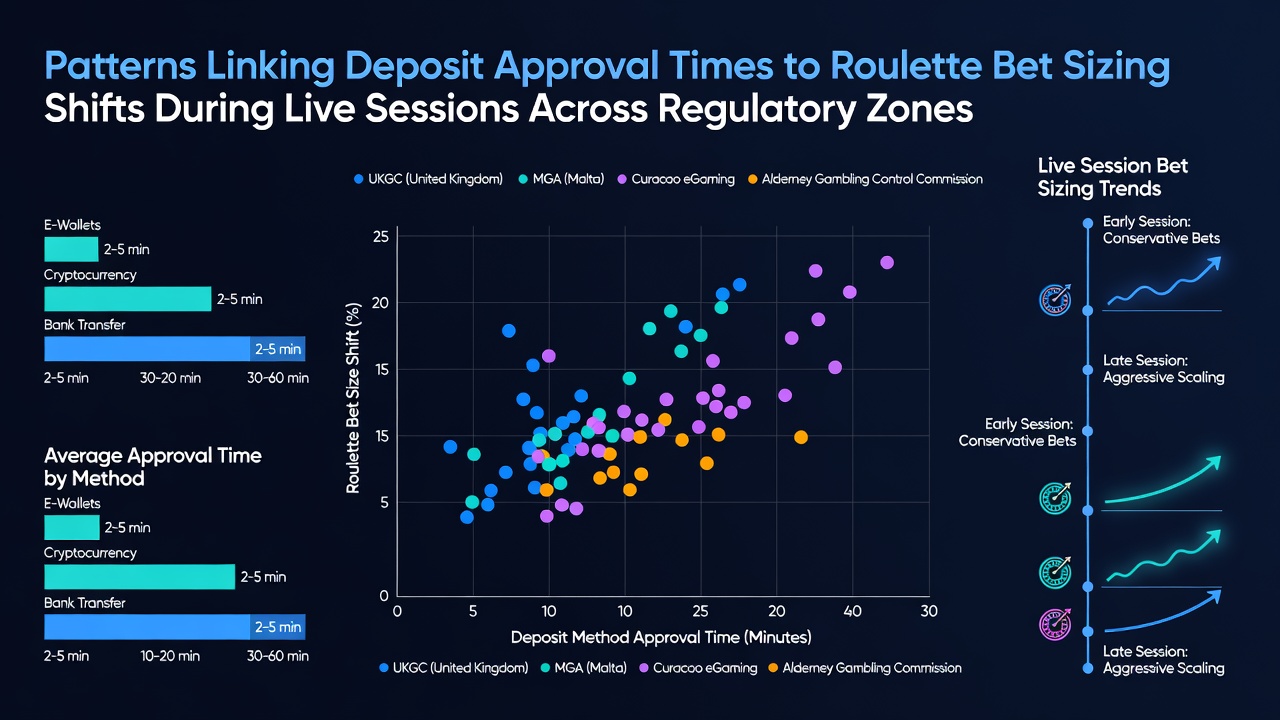
Deposit method approval times create measurable differences in how players adjust roulette wager sizes during live sessions and these patterns vary sharply across regulatory zones because funding speed directly affects available bankrolls in real time. Credit card transactions frequently require five to fifteen minutes for clearance in many jurisdictions while cryptocurrency deposits often finalize within seconds and bank transfers can extend to several hours or more depending on the region and operator setup.
Approval Time Variations by Deposit Type
Observers note that players using slower approval methods tend to start sessions with smaller base bets on live roulette wheels then scale upward once funds appear in their accounts whereas instant methods allow immediate access to full intended stakes from the first spin. Data from platform analytics across multiple markets shows average bet increases of twenty to forty percent occurring within the first ten minutes after a delayed deposit clears and this timing aligns closely with confirmation notifications sent to players.
Regulatory frameworks shape these behaviors because some zones mandate additional verification steps that extend approval windows for certain payment types. In New Jersey operators must follow strict protocols under the Division of Gaming Enforcement that add layers to card processing yet leave crypto pathways comparatively streamlined and these rules produce distinct bet adjustment curves compared to less restrictive European markets.
Regional Regulatory Influences on Betting Adjustments
Across Australian regulatory environments where the Australian Communications and Media Authority oversees interactive gaming patterns indicate that e-wallet users maintain steadier bet sizing throughout sessions while bank transfer players exhibit pronounced upward shifts once approvals post. Research from industry reports compiled in 2025 highlighted how these shifts cluster around peak evening hours when live dealer tables see higher traffic volumes.
European zones present another layer because varying national rules on payment processing create staggered approval landscapes and players in stricter member states often reduce initial roulette stakes by fifteen to twenty-five percent when anticipating longer waits. One study tracking sequential wager data found that approval delays exceeding ten minutes correlated with conservative early-round betting followed by aggressive sizing once balances updated.

Data Patterns Emerging in October 2026
October 2026 brought fresh datasets from cross-border tracking initiatives that reinforced earlier observations about approval timing and bet scaling. Analysts examining live session logs noted consistent sequences where players paused or reduced stakes during pending periods then resumed with larger wagers immediately after clearance and these sequences appeared more pronounced in zones with mandatory cooling periods between deposit initiation and play authorization.
Canadian provincial regulators including those in Ontario have documented similar trends through their oversight of licensed platforms and reports indicate that crypto-enabled accounts show flatter bet size distributions from session start while traditional methods produce step-function increases tied to approval events. This geographic variation underscores how local rules on transaction monitoring influence player decision timing during roulette play.
Platform Design Factors and Player Response
Operators have responded by integrating real-time deposit status indicators into live roulette interfaces and these visual cues appear to moderate the scale of bet adjustments when approvals arrive. Sessions where status updates display prominently show smaller average increases compared to interfaces that bury confirmation details and the difference holds across regulatory boundaries.
Academic researchers examining sequential decision data have identified clusters of activity where delayed deposits lead to conservative opening strategies that shift once funds post and these clusters repeat reliably in markets with comparable approval regulations. The patterns suggest that timing information itself becomes a variable in wager sizing independent of bankroll size.
Conclusion
Connections between deposit approval durations and roulette bet sizing adjustments persist across regulatory zones with clear differences driven by payment type and local oversight requirements. Continued collection of session-level data will likely refine understanding of these relationships as platforms evolve and new payment options enter regulated markets.